Paris Protests Turn Violent as Clashes Erupt Between Demonstrators and Police in France
 Abdulkareem Murtala
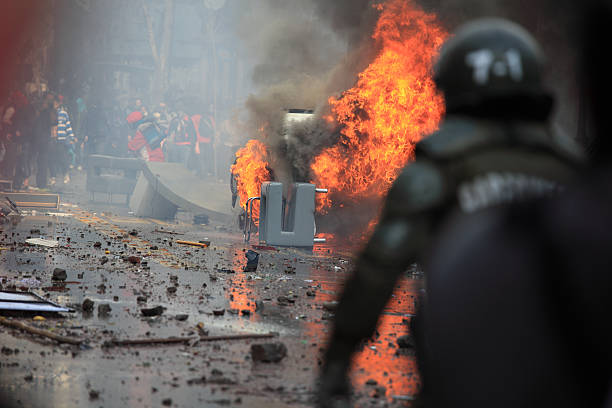
Car overturned and burned
Thousands take to the streets across France for a third consecutive weekend as anger over living costs, education and public services fuels growing unrest.
Fresh clashes have erupted in Paris, France, following nationwide demonstrations on Saturday, October 31, 2026, as public frustration over rising living costs, education conditions and government policies continues to grow.
The demonstrations, which attracted hundreds of thousands of people across the country, began largely peacefully before confrontations broke out between groups of protesters and security forces in several cities, including Paris, Lyon and Toulouse.
What Happened in Paris?
Tensions escalated in the French capital as the main demonstration reached its final destination on the outskirts of Paris.
Some demonstrators reportedly set fire to rubbish bins and street furniture, while masked individuals threw objects at police officers. Authorities responded with tear gas and baton charges in an effort to restore order.
Footage and images from the demonstrations showed fires burning along city streets, thick smoke rising above buildings and security personnel confronting crowds.
The violence also resulted in injuries to police officers and damage to property, although the majority of demonstrators reportedly participated peacefully.
More Than 300,000 People Join Nationwide Demonstrations
According to France’s Interior Ministry, approximately 320,000 people participated in demonstrations across the country, including about 70,000 in Paris.
The turnout marked the third consecutive weekend of nationwide protests, although participation declined compared with previous demonstrations.
Authorities deployed approximately 70,000 police officers and gendarmes across France to maintain public order and prevent further violence.
Hundreds of arrests were reported nationwide as security forces responded to disturbances in different cities.
Why Are People Protesting in France?
The demonstrations reflect growing dissatisfaction with several economic and social challenges facing the country.
The protest movement initially gained momentum through student demonstrations over deteriorating school facilities, teacher shortages and concerns about access to higher education.
It has since attracted support from labour unions, youth organisations, Yellow Vest activists and other groups.
Their concerns include:
- Rising living costs and fuel prices.
- Growing economic inequality.
- Deteriorating conditions in public schools.
- Pressure on public services.
- Concerns about policing and civil liberties.
The participation of different social groups has broadened the demonstrations beyond their original student-led demands.
Government Faces Growing Pressure
The demonstrations present another challenge for President Emmanuel Macron’s government, which is already dealing with economic difficulties, public debt concerns and mounting political pressure.
Prime Minister Sébastien Lecornu has held discussions with student representatives as the government considers possible responses to some of their demands.
However, tensions remain, with student organisations and trade unions indicating that further demonstrations and institutional blockades could take place in the coming days.
Protests Extend Beyond France
France is not the only European country experiencing youth-led demonstrations.
Similar protests have emerged in Germany and other European countries, with participants raising concerns about education, housing affordability, economic pressures and the future of young people.
The developments point to wider concerns across parts of Europe about economic opportunities, public services and government accountability.
What Happens Next?
With student organisations and trade unions signalling further demonstrations, attention is turning to how the French government will respond and whether tensions will ease in the coming days.
For now, authorities remain on alert as France faces another period of public demonstrations and political uncertainty.
About the Author