US Airports Flight Shutdown: FAA Grounds Flights Nationwide
 Abdulkareem Murtala
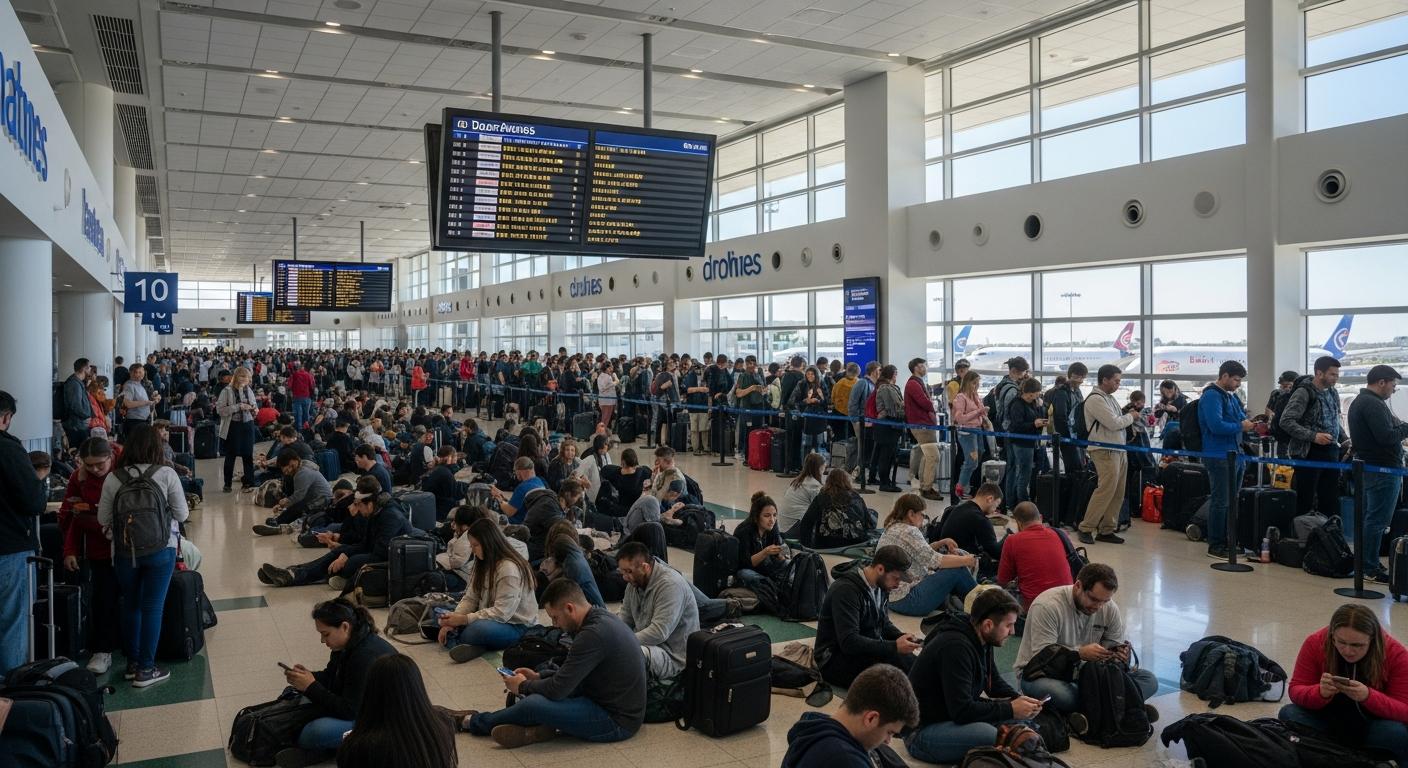
Travellers crowd airport terminals after the FAA ordered a nationwide ground stop across US airports.
The US airports flight shutdown caused widespread chaos on Friday, November 13, after the Federal Aviation Administration (FAA) ordered a nationwide ground stop. The decision forced departing aircraft to remain on the ground and left thousands of passengers stranded.
The disruption turned busy airport terminals into overcrowded waiting areas. Travellers struggled to find information about their flights as cancellations and delays spread across the country.
Videos circulating on social media showed packed terminals. Some passengers sat on airport floors while others waited near departure boards for updates.
The disruption followed a communications failure affecting air traffic control centres across the United States. The FAA imposed the restriction as a precaution while technicians investigated the problem.
Although the agency eventually lifted the ground stop, airlines continued to face operational challenges. Flight cancellations and delays also extended into Saturday.
What Caused the US Airports Flight Shutdown?
The FAA issued the nationwide ground stop on Friday afternoon, November 13. The agency instructed airlines to keep departing aircraft on the ground until further notice.
The restriction affected airports across the country. It also triggered one of the most significant disruptions to American aviation in recent years.
However, the order did not require every aircraft to land immediately. Planes already in the air generally continued to their destinations. Authorities handled incoming international flights on a case-by-case basis.
The shutdown lasted more than four hours. The FAA eventually announced that American airspace could reopen.
However, reopening the airspace did not immediately restore normal operations. Airlines still had to reorganise aircraft, crews and passenger schedules.
Why Did the FAA Ground Flights Across America?
The nationwide shutdown followed a communications problem at multiple air route traffic control centres.
These facilities coordinate aircraft movements and help maintain safe distances between planes.
Officials reported problems with communications and radar systems. The failures created instability across the air traffic control network.
Transportation Secretary Sean Duffy later blamed ageing aviation technology. He explained that existing systems struggled as authorities introduced newer technologies.
The administration said the incident exposed weaknesses in America’s air traffic control infrastructure. It also renewed calls for greater investment in aviation technology.
Homeland Security Secretary Markwayne Mullin said officials had found no indication of a cyberattack.
The FAA therefore treated the shutdown as a precautionary safety measure. Technicians needed time to investigate and test the affected systems.
Thousands of Passengers Left Stranded
The US airports flight shutdown quickly affected passengers at major airports across the country.
Travellers faced cancelled departures, lengthy queues and missed connections. Many also struggled to get reliable information from airlines.
Airport terminals became increasingly crowded as passengers waited for updates. Others monitored departure boards for changes to their flight schedules.
Flight-tracking figures reported by international media showed thousands of cancellations and tens of thousands of delays.
The disruption also affected sports teams, business travellers and other groups. Many had to reconsider their transportation arrangements as airlines struggled to restore normal schedules.
Even after the FAA lifted the restriction, passengers continued to experience delays. Airlines had to reposition aircraft and crews that the shutdown had disrupted.
When Did Flights Resume?
The FAA lifted the nationwide ground stop on Friday evening. This decision allowed departing aircraft to resume operations.
However, authorities warned that normal air travel would take time to return.
Airlines faced accumulated delays, cancelled flights and disrupted crew schedules. They also had to accommodate passengers who missed their original connections.
The Associated Press reported more than 2,000 flight cancellations on Saturday. Airlines continued working to recover from the disruption.
Passengers received advice to check directly with their airlines for updated departure information. They could no longer rely on their original flight schedules.
The incident demonstrated how a technical problem can disrupt an entire national transportation network.
Questions Raised About America’s Aviation Infrastructure
Beyond the immediate inconvenience, the incident has raised questions about the reliability of America’s air traffic control infrastructure.
The United States operates one of the world’s busiest aviation networks. Its air traffic control system coordinates thousands of domestic and international flights.
Friday’s disruption exposed the risks of relying on ageing technology. It also highlighted the challenges of introducing newer systems without affecting existing operations.
Transportation officials have called for greater investment in modern aviation infrastructure. They hope such improvements will reduce the risk of similar disruptions.
For passengers, however, the immediate priority remains reliable flight schedules.
Although the nationwide ground stop has ended, its effects continue to affect American airports. Airlines must still work through cancellations, delays and disrupted travel plans.
About the Author