
 Erudite
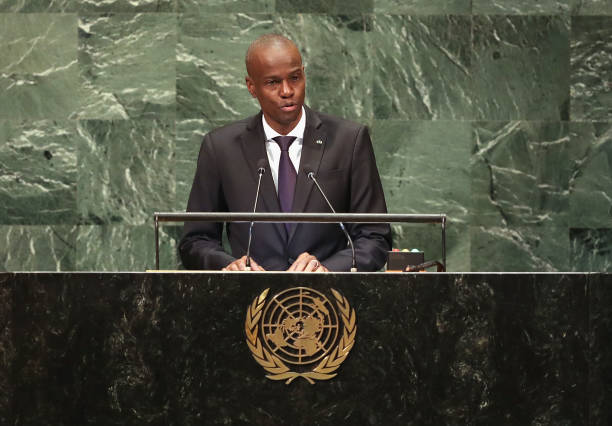
NEW YORK, NY - SEPTEMBER 27: President Haiti Jovenel Moise addresses the United Nations General Assembly on September 27, 2018 in New York City. World leaders gathered for the 73rd annual meeting at the UN headquarters in Manhattan. (Photo by John Moore/Getty Images)
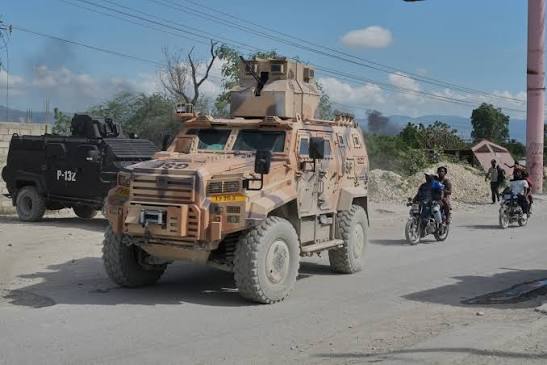
El Salvador once faced a problem that seemed almost impossible to defeat.For years, powerful gangs controlled neighborhoods, extorted businesses, recruited young people and terrorized communities. Under President Nayib Bukele, the government launched one of the most aggressive anti-gang campaigns in the world. Officially reported homicide levels fell dramatically, although human rights organizations have raised serious concerns about mass arrests, due process and the reliability of some official crime statistics.Now, El Salvador is bringing part of that security experience to Haiti.But for many Haitians, that raises an uncomfortable question:Can the methods that transformed El Salvador's security situation really work in Haiti?And perhaps an even bigger question:At what point does international security assistance begin to feel like foreign control?That debate has become harder to ignore after four Salvadoran aviation technicians serving with the international Gang Suppression Force went missing following an attack on their armored vehicle near Croix-des-Bouquets, outside Port-au-Prince.The vehicle was attacked with gunfire and explosives and caught fire. The four personnel escaped the burning vehicle but subsequently lost contact with their colleagues.President Nayib Bukele has since announced a military operation aimed at rescuing the four men and warned Haitian gangs that a much stronger response could follow if they are not returned alive.For Salvadorans, the situation is understandably personal.For Haiti, however, the question is larger than the fate of four foreign personnel.
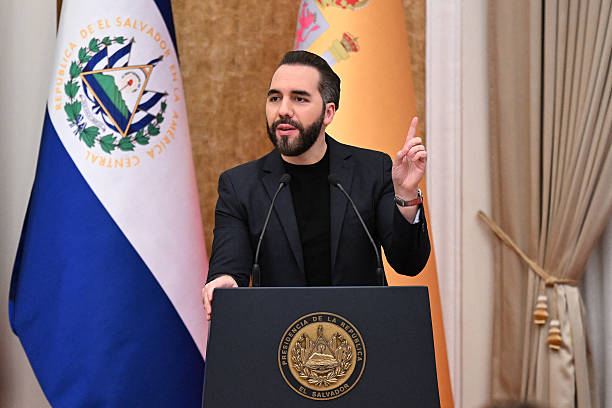
Haiti Is Not El Salvador
Haiti's crisis cannot simply be placed beside El Salvador's and treated as the same problem.El Salvador had functioning state institutions, a national police structure and a government capable of imposing its authority across the country, even though gangs had established significant territorial influence.Haiti's crisis is far more deeply connected to institutional weakness, political instability, poverty, corruption, the collapse of state authority and the ability of armed groups to control territory and critical routes.The United Nations says nearly 1.5 million people have been displaced by the violence, while more than 5,700 people were killed or injured between January and mid-September 2026.The Gang Suppression Force was created precisely because Haitian authorities need international support to confront armed groups that have become extraordinarily powerful.But international assistance creates another responsibility: Haiti must remain at the center of Haiti's security strategy.The Organization of American States has itself emphasized respect for Haiti's sovereignty and the importance of Haitian-led solutions while supporting the international force.That distinction matters.The Fear Behind the QuestionWhen Haitians question foreign forces operating on their soil, that does not necessarily mean they support the gangs.A population trapped between armed groups and foreign security personnel can want both things at once: protection from criminals and control over its own future.That is the tension at the heart of Haiti's crisis.People want their streets back.They want businesses to reopen.They want children to go to school without fear.They want kidnappings to stop.But they also want a country where Haitian institutions are eventually strong enough to provide those things without depending indefinitely on foreign forces.That concern becomes even more important when the foreign force includes personnel from a country whose president has become internationally known for an uncompromising war against gangs.Bukele's approach has produced a dramatic decline in reported gang violence in El Salvador. But Human Rights Watch has also documented serious concerns surrounding the government's security campaign and the erosion of due-process protections.So when Haitians look at El Salvador, they are not simply looking at a success story.They are also looking at a model with difficult questions attached to it.
The Salvadoran Mission Is Not Simply “El Salvador's Army in Haiti”
There is another important distinction.The Salvadoran personnel are serving within the UN-backed Gang Suppression Force, a multinational operation supporting Haitian security institutions. As of August 31, the force had personnel from six countries, including Chad, Sri Lanka, Guatemala, El Salvador, Mongolia and Jamaica.El Salvador's contribution includes aviation capabilities. The UN report listed an aviation unit with four medium utility helicopters.That means the story is more complicated than saying that El Salvador has simply sent its army to occupy Haiti.It has not.But the concern over foreign military personnel remains legitimate.The more foreign forces become involved in Haiti's security, the more important it becomes to answer questions about command, accountability, rules of engagement and the eventual transfer of responsibility back to Haitian institutions.And Then Came Bukele's WarningBukele's response to the kidnapping has changed the temperature of the situation.He warned Haitian gangs that what they had experienced so far would be insignificant compared with what could follow if the Salvadoran personnel were not released alive.That statement carries particular weight because Bukele's domestic reputation was built around confronting gangs with overwhelming state power.But Haiti is watching.The question is whether a strategy developed in San Salvador can be transferred to Port-au-Prince without producing a new cycle of violence.Haitians have already experienced foreign interventions before.They know that international forces can arrive with promises of security and leave behind questions about sovereignty, accountability and what happens after the foreigners leave.That history makes the Haitian perspective impossible to ignore.
Security Today, Haitian Control Tomorrow
A reasonable argument is that Haiti needs international help.The gangs have become too powerful for a severely weakened state to defeat alone. The UN itself says the Gang Suppression Force has produced localized security gains, including temporary reductions in gang activity and improved civilian movement in some areas.But an equally important argument is that international forces cannot permanently replace the Haitian state.The ultimate objective should not simply be to defeat gangs.It should be to rebuild a Haitian state capable of preventing them from returning.That means strengthening the Haitian National Police, rebuilding the justice system, securing borders, stopping the flow of weapons, creating functioning courts and restoring public institutions.The UN's own representative for Haiti has emphasized that security operations alone cannot deliver lasting stabilization. A sustainable solution, he said, requires a comprehensive Haitian-led approach combining territorial recovery with a sustained state presence.That may be the most important lesson of all.El Salvador's experience can offer Haiti ideas.It cannot give Haiti a substitute for building Haiti.The Bigger QuestionThe immediate priority is clear: the four Salvadoran personnel must be found and brought home safely.But beyond this crisis lies a much bigger question.Can foreign forces help Haiti take back its streets without taking ownership of Haiti's future?That is the balance the international community must get right.Haitians need security.They also need sovereignty.And ultimately, they need a Haitian state strong enough to provide both.
About the Author


 Abdulkareem Murtala




This is really great to hear them speak up.