China’s CE-25A Electric Passenger Aircraft Completes First Piloted Flight
 Abdulkareem Murtala
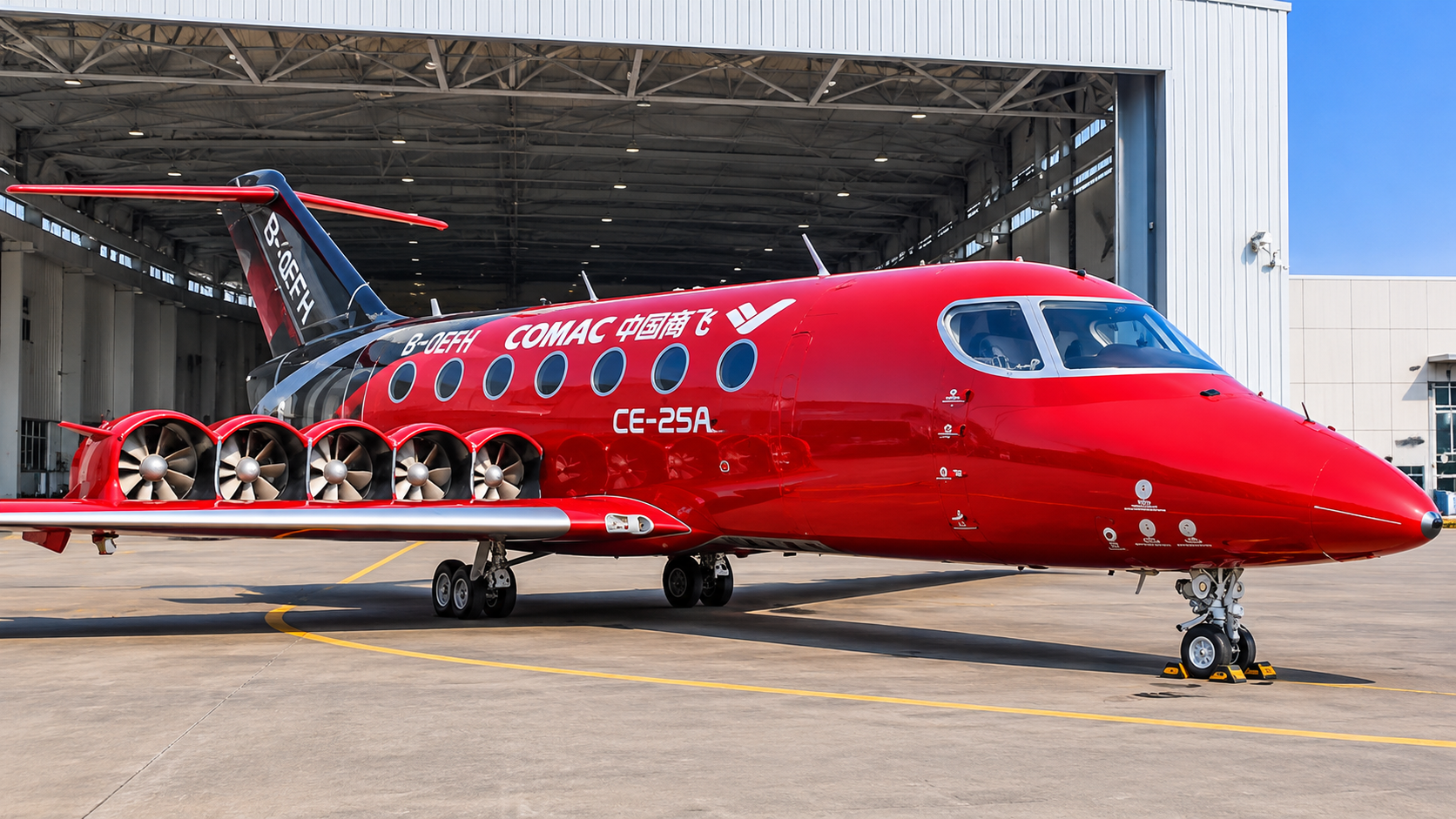
China's 19-passenger CE-25A electric aircraft, which completed its first piloted flight on November 14, 2026.
China has achieved a major milestone in electric aviation after its CE-25A electric passenger aircraft completed its first piloted flight on November 14, 2026. Developed by the Commercial Aircraft Corporation of China (COMAC), the 10-tonne-class aircraft is designed to carry 19 passengers and travel at a cruising speed of 300 kilometres per hour.
The successful flight in Binzhou, Shandong Province, followed 19 autonomous flight validations, highlighting China’s progress in developing electric aircraft for regional passenger transportation.
CE-25A Electric Aircraft Completes First Piloted Flight
According to China’s Xinhua News Agency, the CE-25A completed its first crewed intelligent flight with two pilots and one flight-test engineer on board.
The aircraft reportedly operated normally during the test, with its performance indicators meeting expectations.
This milestone followed its first autonomous flight on February 2, 2026. Since then, the development programme has accumulated 19 autonomous flight validations before moving to the piloted testing stage.
The successful flight represents an important step towards demonstrating the aircraft’s operational capabilities under human supervision.
China’s 10-Tonne Electric Aircraft Can Carry 19 Passengers
One of the most notable features of the CE-25A is its passenger capacity. Unlike smaller electric aircraft designed for individual or two-person transportation, the COMAC project targets regional commercial aviation.
The aircraft’s published specifications include:
- Aircraft name: CE-25A
- Manufacturer: COMAC
- Maximum take-off weight: 10 tonnes
- Passenger capacity: 19 passengers
- Cruising speed: 300 km/h
- Cruising altitude: 2,400 metres
- Reported range: 400 kilometres
- Propulsion: Distributed electric ducted-fan system
The aircraft is intended primarily for commercial flights between cities, potentially offering another transportation option for relatively short regional journeys.
How the CE-25A Electric Propulsion System Works
The CE-25A uses a distributed electric propulsion system featuring multiple electric ducted fans positioned along its wings.
Instead of relying on conventional fuel-powered jet engines, the aircraft uses electric motors to drive its propulsion system.
This design is a significant feature of the project because it demonstrates how electric propulsion technology could be applied to larger passenger aircraft rather than being limited to small experimental planes.
The aircraft is being developed through a partnership involving COMAC, battery manufacturer CATL and Shanghai Jiao Tong University.
19 Autonomous Flights Before Its First Piloted Flight
The aircraft’s development has involved both autonomous and crewed testing.
Before the November 14 milestone, the CE-25A had completed 19 autonomous flight validations. Its first autonomous flight took place in February 2026.
However, the aircraft’s autonomous testing should not be confused with approval for pilot-free commercial passenger services. The first piloted flight included two pilots and a flight-test engineer, and the aircraft remains under development.
Further testing will be necessary to establish its performance, reliability and readiness for commercial operations.
CE-25A Awaits Further Aviation Certification
Despite the successful flight, the CE-25A has not yet received final commercial certification.
Xinhua reported that China’s Civil Aviation Administration had accepted the aircraft’s application for a type certificate.
This is an important step in the certification process, but acceptance of an application does not mean that the aircraft has been approved to carry paying passengers.
The aircraft must still meet the relevant aviation safety and regulatory requirements before commercial services can begin.
What the CE-25A Means for the Future of Electric Aviation
The development of the CE-25A reflects China’s growing interest in electric aviation and advanced transportation technology.
If the aircraft successfully completes its testing and certification programme, it could help expand the use of electric propulsion in regional passenger transportation.
Its 19-passenger capacity, reported 400-kilometre range and 300 km/h cruising speed make it an interesting project in the emerging electric aviation sector.
For now, the first piloted flight marks a major development milestone. The next challenge will be demonstrating that the aircraft can meet the demanding safety, reliability and operational standards required for commercial passenger aviation.
About the Author